McAfee
Building a journey that earns trust and drives customer conversion
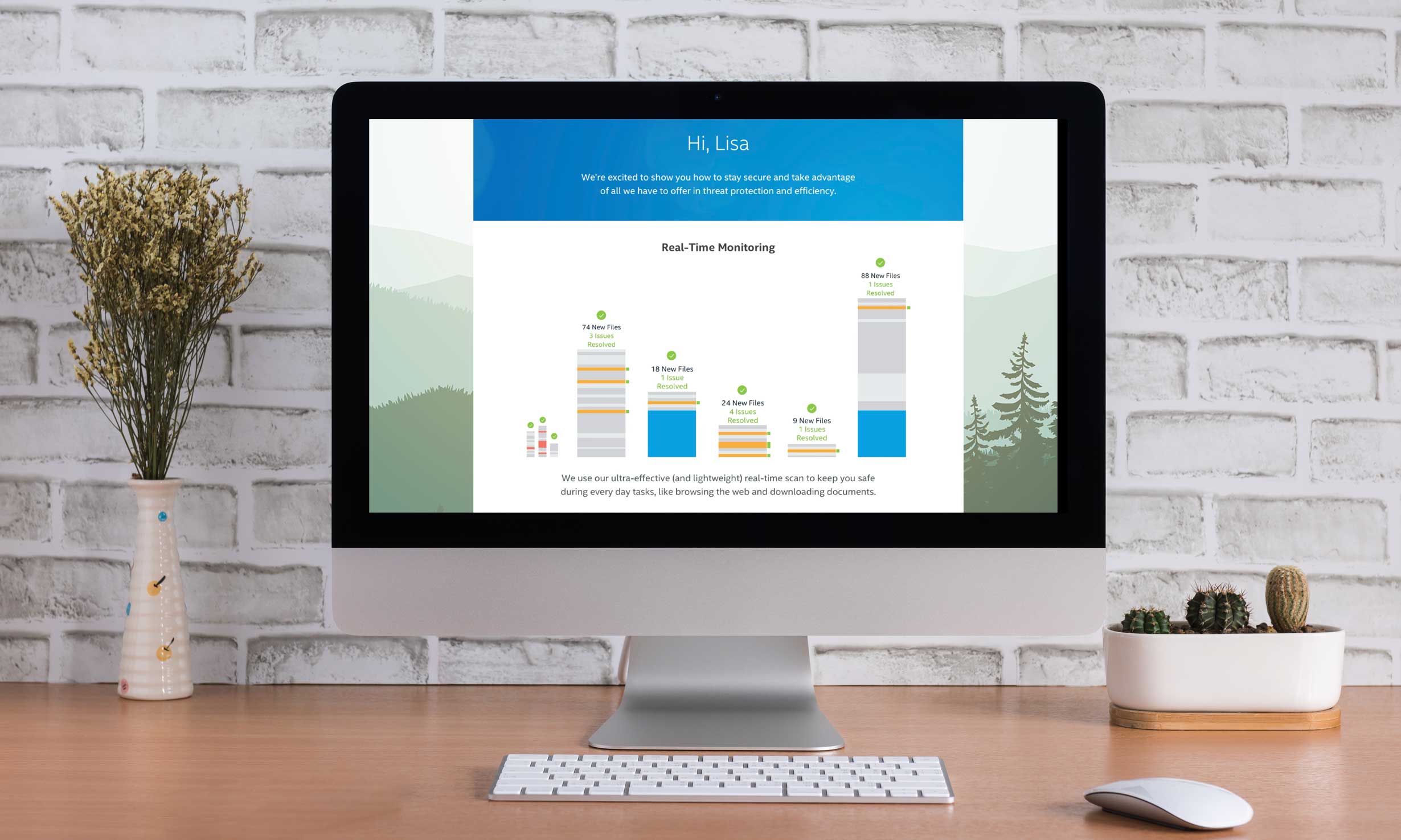
Why this mattered
McAfee LiveSafe was meant to be an easy sell—antivirus software conveniently pre-loaded onto brand-new laptops. The problem? Most people didn't want it. Over half of users disliked or distrusted the product, annoyed by constant pop-ups, unclear value, and aggressive attempts to convert trial users into paying customers.
What I did
Senior UX Designer focused on journey mapping, interaction design, and cross-surface touchpoints.
Impact delivered
- -An improved customer experience projected to increase trial-to-paid conversion from 3% to 5%
- -Reduced trial period uninstalls from 60% to at-or-below 50%.
This feels like an annoying sibling
That's how users described LiveSafe before we redesigned it. Instead of feeling quietly protected, people felt pestered. Pop-ups interrupted them. Notifications barked instructions. LiveSafe wasn't earning trust — it was demanding attention.
Our work started with a simple question:
What if this acted less like it was following you around the house... and more like someone who had your back?

The principles that guided our work
To guide our decisions, we focused on a few simple design principles: show up consistently, build trust slowly, and stay out of the user's way.
Don't make users work — Let them effortlessly experience value.
Connect on a personal level — Demonstrate understanding and respect.
Ask rather than tell — Give users choices rather than demands.
Consistency at every touchpoint — (an omnipresent principle) Build familiarity and confidence through predictable interactions.
The journey below shows how these principles came to life.
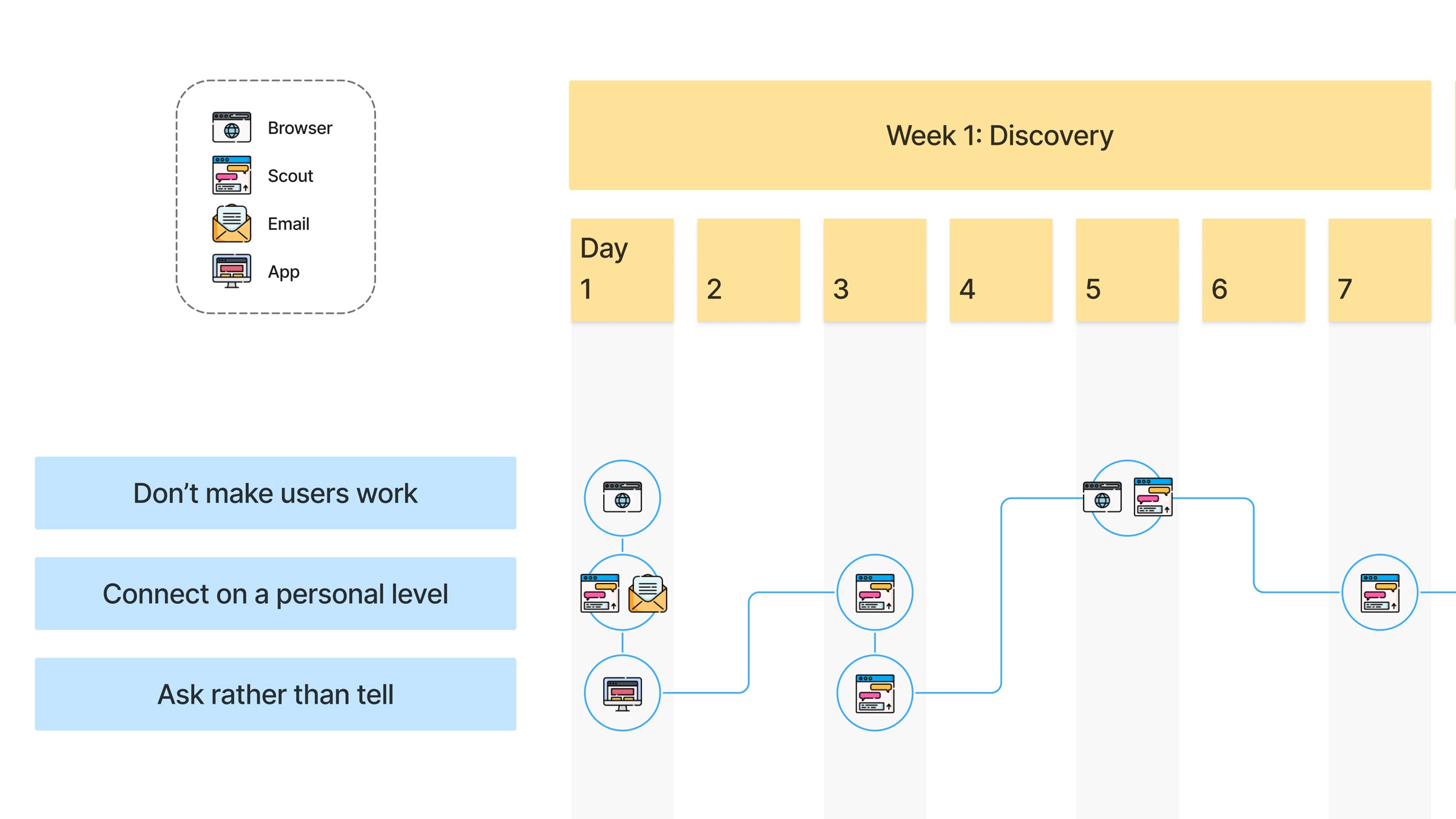
Mapping our design principles to our customer touchpoints over the customer journey
Mapping the whole journey, not just the transaction
Customers don't make decisions in isolation. They form opinions long before they ever reach a purchase screen.
To design for this reality, I mapped the entire customer journey—from Day 1 discovery through usage, trial expiration, and beyond Day 60. This gave us a clear, shared view of where users might feel lost, annoyed, or confused—and a framework to design a better, more consistent experience across every touchpoint.
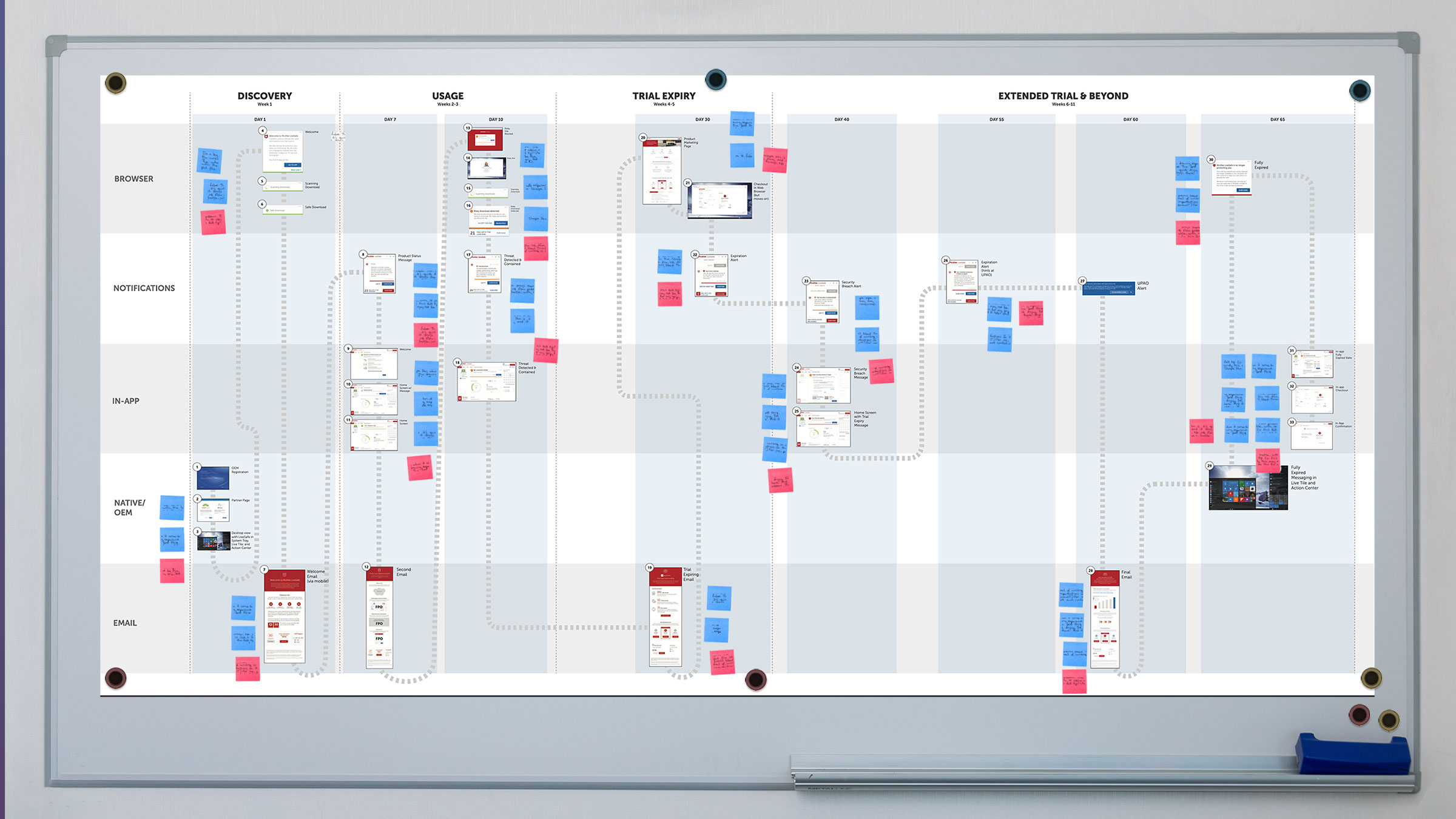
Taking our touchpoint mapping and making it real. Wireframes, collaboration, and one big piece of plotter paper.
The following sections are a snapshot of how these principles were expressed across the customer journey…
CUSTOMER JOURNEY WEEK 1: DISCOVERY
Making a great first impression
Users were often confused or frustrated when LiveSafe unexpectedly appeared on their new laptops. We redesigned the discovery moment to clearly introduce LiveSafe, transparently communicate its value, and gently prompt (never push) users toward engagement. By immediately clarifying LiveSafe's purpose and benefits, we removed initial distrust and set a tone of respect from day one.
Our new welcome email gave users confidence right away with clear value and transparency. Other touchpoints included discovery moments in the LiveSafe application, through Scout, and in the OS
CUSTOMER JOURNEY WEEKS 2-3: USAGE
Demonstrating value without demanding attention
Many antivirus products interrupt users to prove their worth. We took the opposite approach — letting LiveSafe's value show up quietly and consistently across Scout and the app itself. Whether through helpful status updates or a calming, "your computer is safe" message inside the app, users stayed informed without ever feeling pressured to act.

We designed interactions—like subtle notifications from our chatbot "Scout" and transparent security scans—to demonstrate value without demanding attention or disrupting tasks
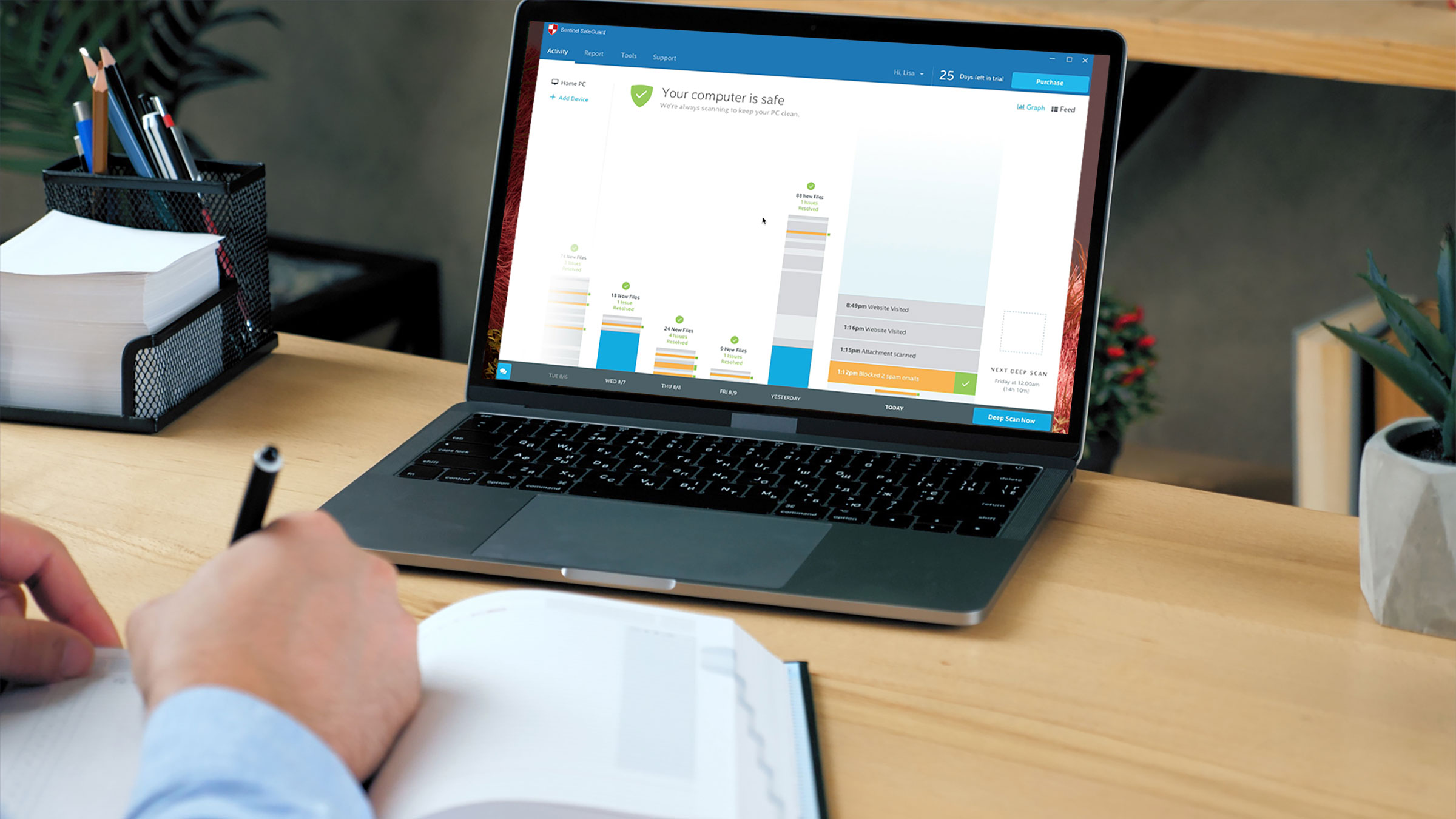
Inside the app, users could see exactly how LiveSafe had been protecting them—without needing to click, configure, or investigate. Other touchpoints included usage and laptop security/safety reports via email
CUSTOMER JOURNEY WEEKS 4-5: TRIAL EXPIRING
Proving worth when it counts
Many antivirus trials end abruptly, leaving users annoyed and unprotected. Instead, we proactively demonstrated LiveSafe's value by showing users exactly how we'd protected them over the trial, even after expiration. By clearly summarizing our impact—blocked threats, secure files, safer browsing—we turned the trial expiry into a compelling case for conversion.
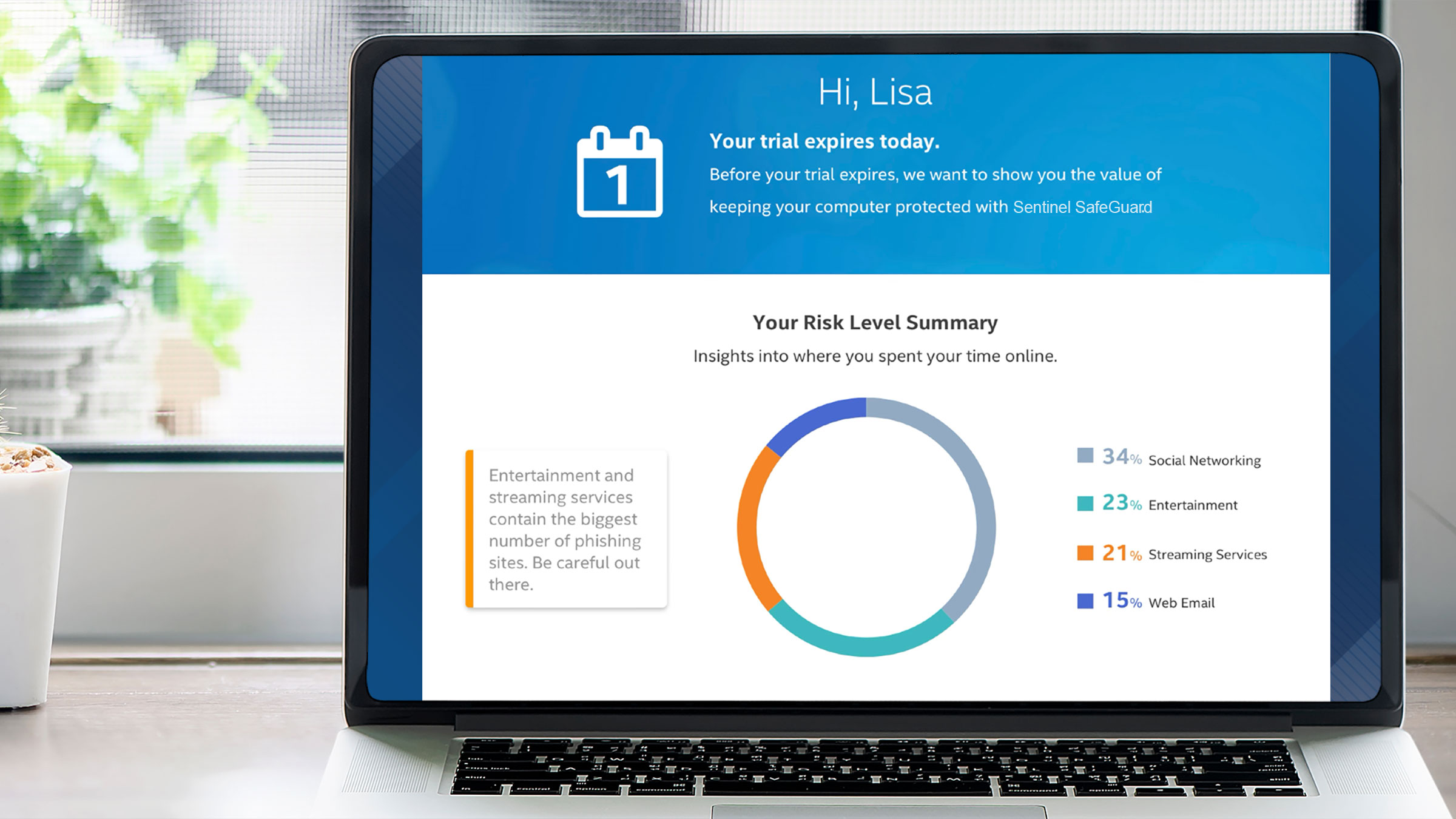
Personalized security summaries like in this email clearly communicated LiveSafe's value, increasing user motivation to subscribe. Other touchpoints included reports within Scout and the LiveSafe application
CUSTOMER JOURNEY WEEKS 6-11: EXTENDED TRIAL & BEYOND
Converting skeptics through patience and generosity
Our extended trial offered continued lightweight protection even after expiration, without intrusive demands. By respecting user autonomy and generously providing ongoing protection, we gently encouraged conversion and significantly improved perceptions of LiveSafe.
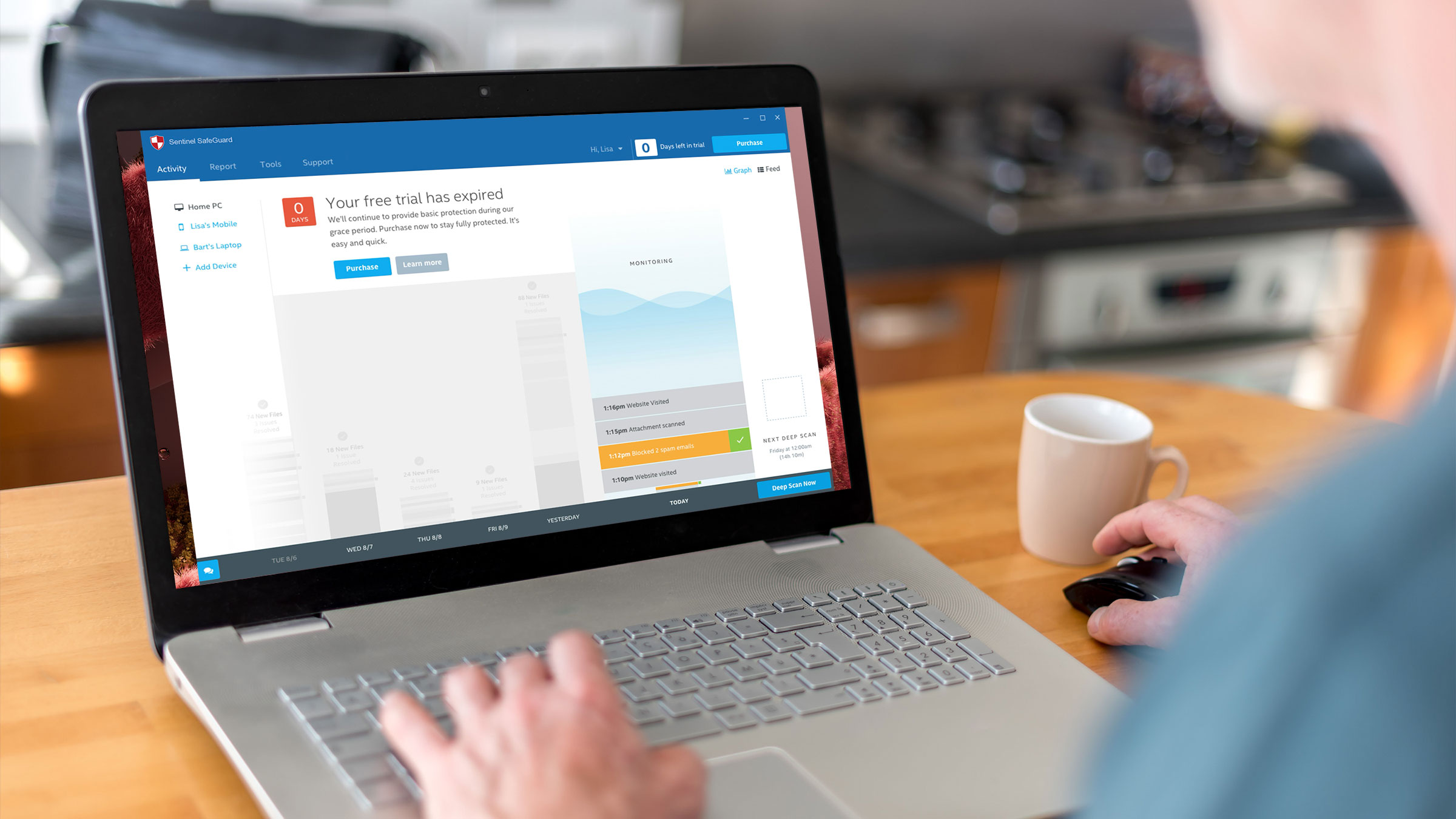
Extended trial interactions in the LiveSafe app prioritized respect and generosity, building trust and increasing conversions. Other touchpoints included email
The impact: building trust that converts
While our agency engagement ended before results went live (a typical handoff model), the impact of our work was clear: we transformed LiveSafe from a frustrating, interruptive product into a trusted, supportive presence across the customer journey.
By removing aggressive, transactional tactics, we created space for users to become customers on their own terms.
In their place, we designed simple, respectful interactions that built confidence over time and strengthened LiveSafe's relationship with its users.
This wasn't just a redesign of screens — it was a redesign of how LiveSafe showed up in people's lives.

What I learned about designing for distrusting users
This project reinforced a truth I come back to often: customer conversion happens when you've earned trust, not when you demand attention.
When people feel in control and unpressured, they're more likely to say yes.
Mapping the full customer journey early created clarity not just for our team, but for our client — shifting their mindset from transactions to relationships. And designing for trust meant showing up consistently, removing friction, and respecting the user's choices every step of the way.
Next up
Design Critique at Duo