Indeed
The talent pool was shrinking and I had 12 weeks to prove design could save it
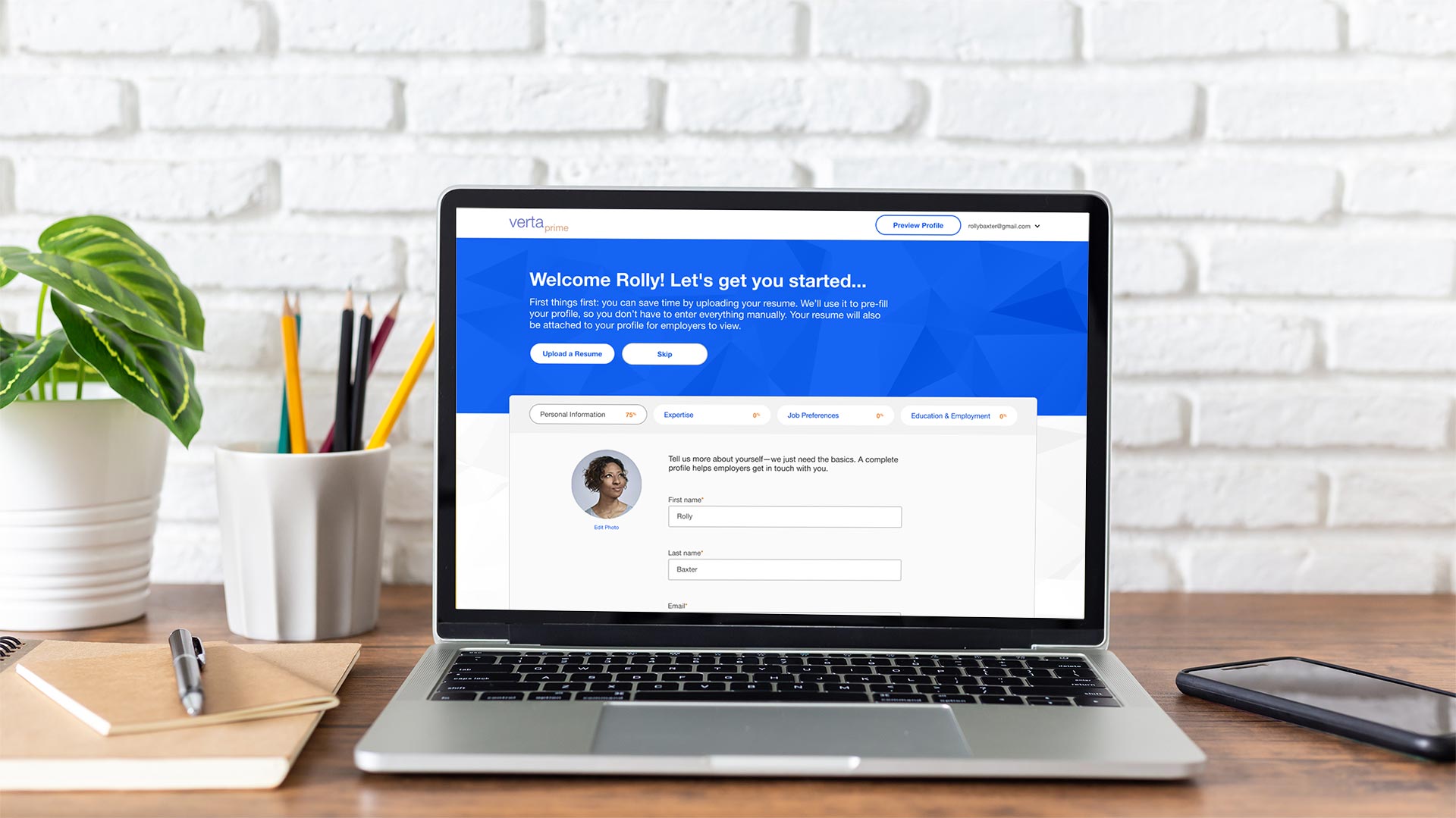
Why this mattered
Indeed offered employers a premium subscription to access a curated pool of top candidates. But the application keeping that pool full was 13 pages long. Qualified candidates were abandoning it halfway through. Employers were questioning the value of their subscription, putting revenue at risk.
What I did
I came in as a contractor with 12 weeks, no PRD, and loose scope. I reframed what looked like a form design problem into a workflow inefficiency affecting candidates, internal review teams, and the business. Then I expanded beyond my brief — redesigning the full candidate journey and proposing automation that nobody asked for but everyone needed.
Impact delivered
- -~60% faster completion (projected via validation testing)
- -Soft approval automation designed
- -Manual review burden reduced for internal teams
- -Asked to convert to FTE after contract
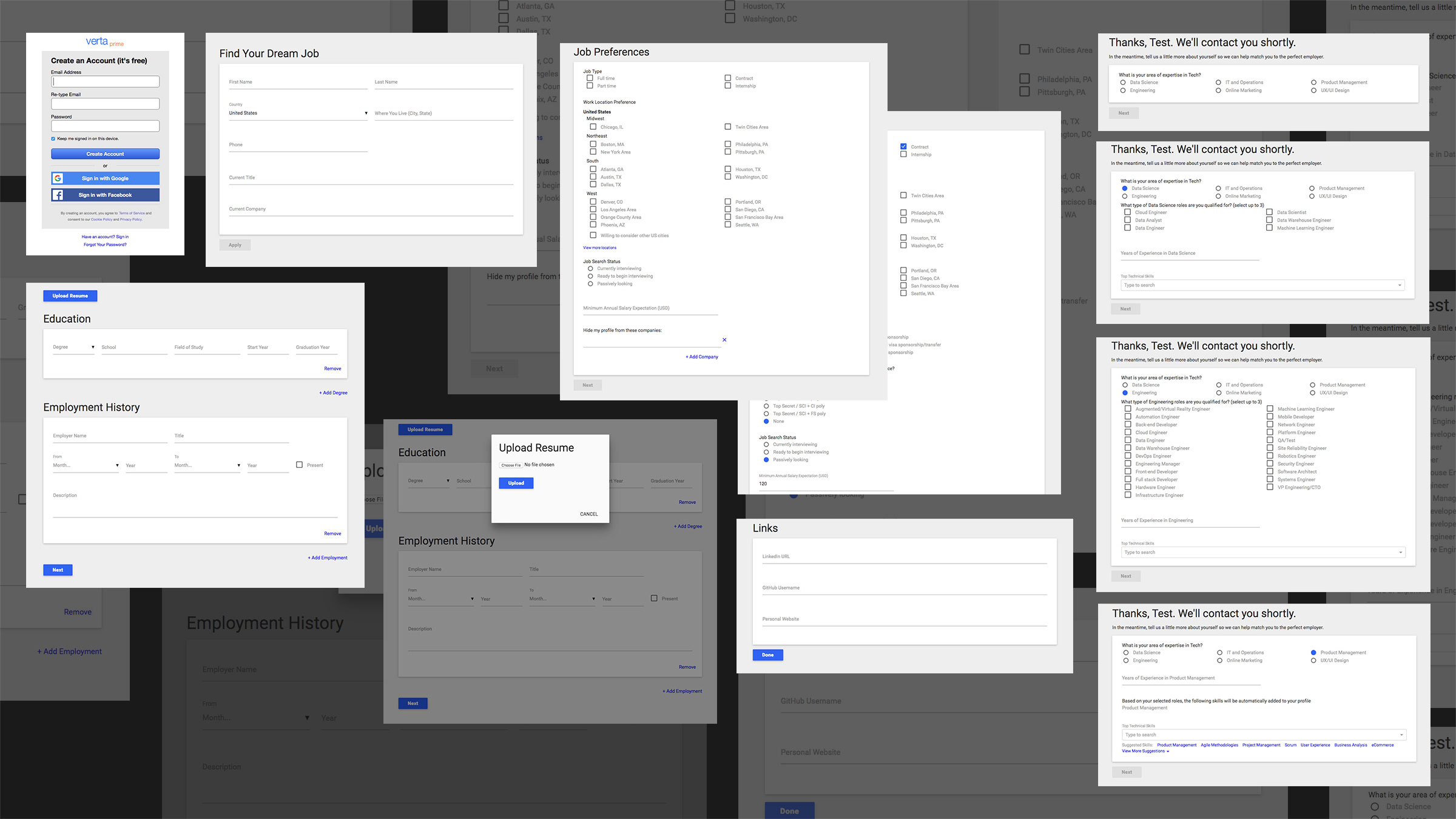
The original 13-page application created friction and drop-off in the candidate journey
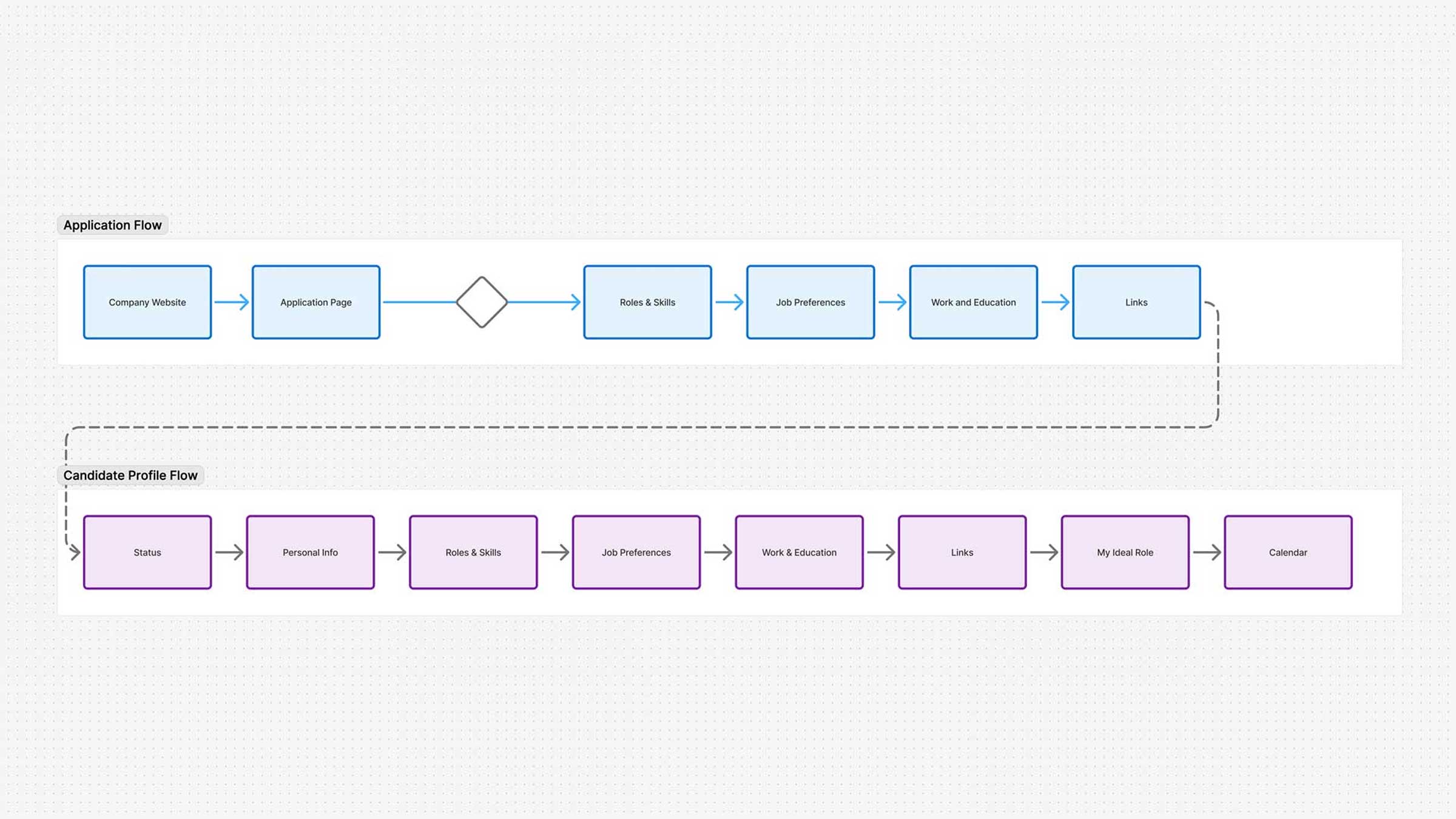
Application and candidate profile existed as two disconnected flows, creating another drop-off point
This wasn't form design, it was a workflow efficiency problem
Discovery sessions with five stakeholders revealed something unexpected: Internal review teams didn't need all this information to make approval decisions. We were asking candidates for pages of unnecessary data upfront. This wasn't about prettier forms, it was workflow inefficiency affecting three audiences: candidates (friction), review teams (manual burden), and the business (shrinking pipeline).

Candidates: "Why so many questions?"

Internal teams: "We don't need as much data"

The business: "Our talent pool is at risk"
Many options, one timeline
With limited time and authority, I considered a few paths forward: keep all pages but add save/resume functionality (doesn't solve root cause), use a pre-qualification screener (risks losing talent), or simplify the flow to essential information (medium lift, addresses all audiences). But I also saw something no one asked me to solve: the application and profile flows were artificially separated, creating a second drop-off point.
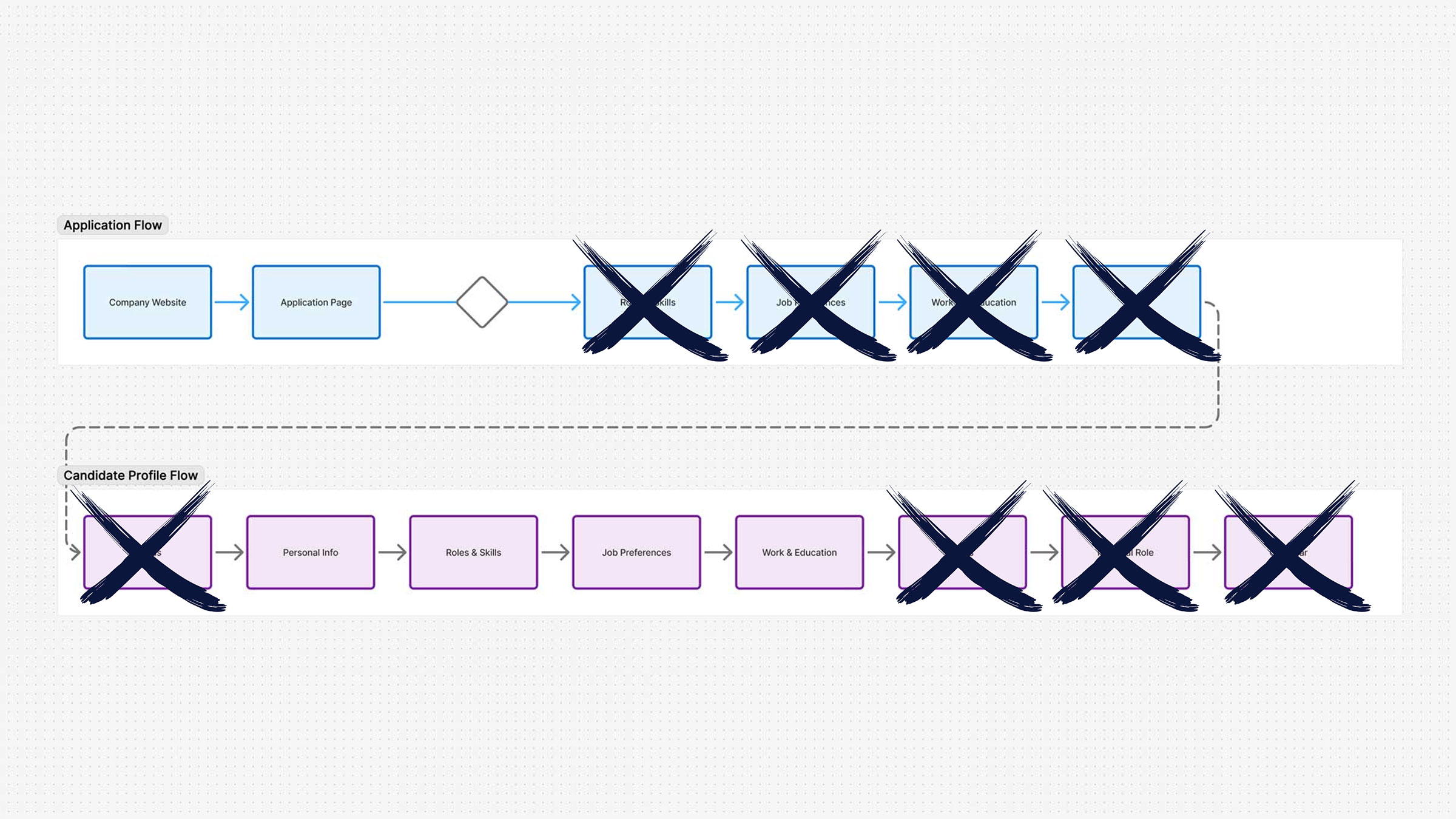
Simplifying the flow to essential information was medium effort and addressed all audiences
Designing beyond the ask
I recommended simplifying the flow to collect essential information only—AND expanding to redesign the entire journey as one flow. I reduced 13 pages to 5, added progress navigation, and proposed soft approval automation to route applications intelligently. Engineering balked at the level of effort while review teams were all in; this would solve their pain. I included the automation in my deliverables anyway, knowing my contract would end before I'd see if it shipped.
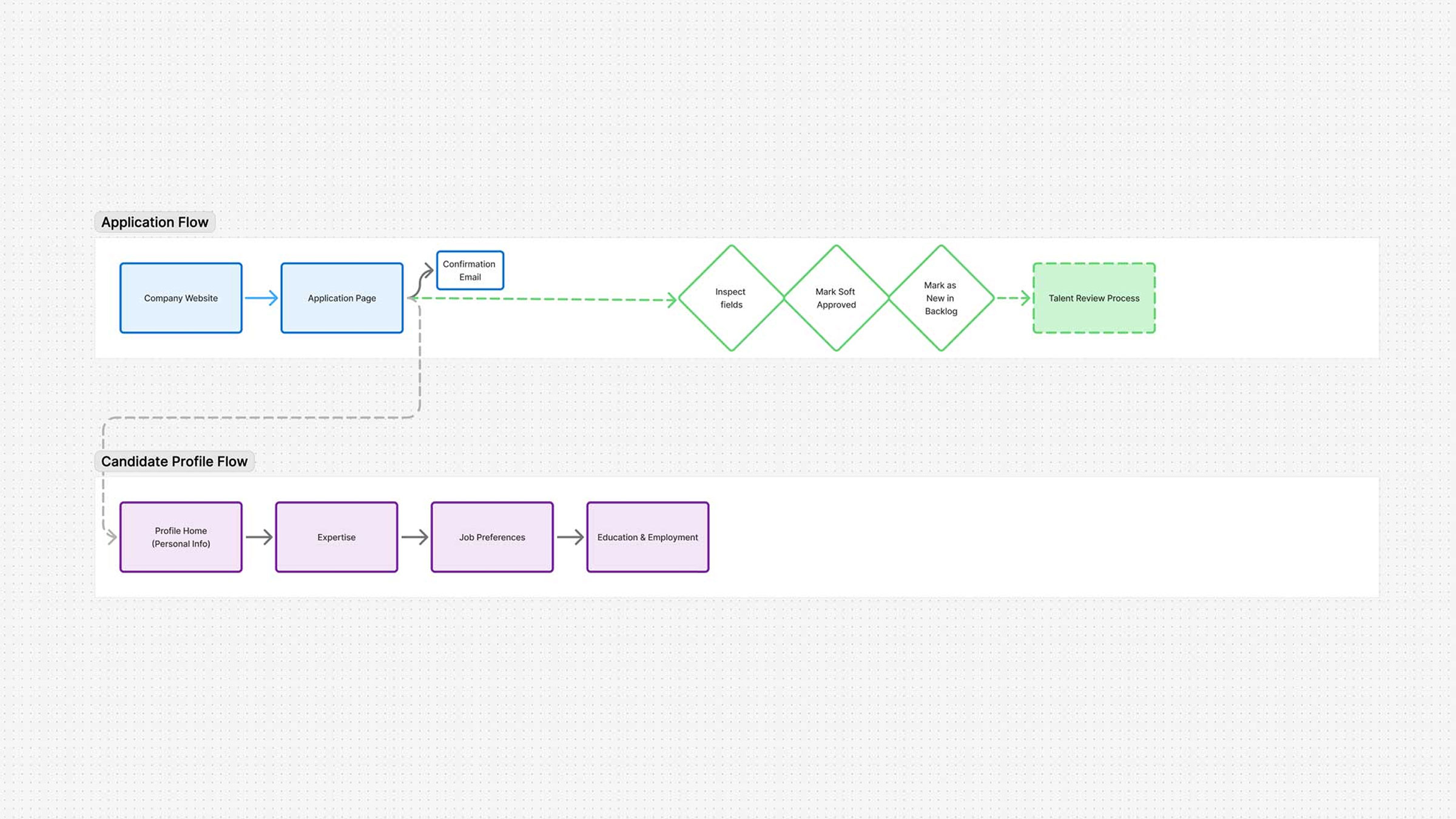
Soft approval automation connects candidate submission to a smarter review pipeline
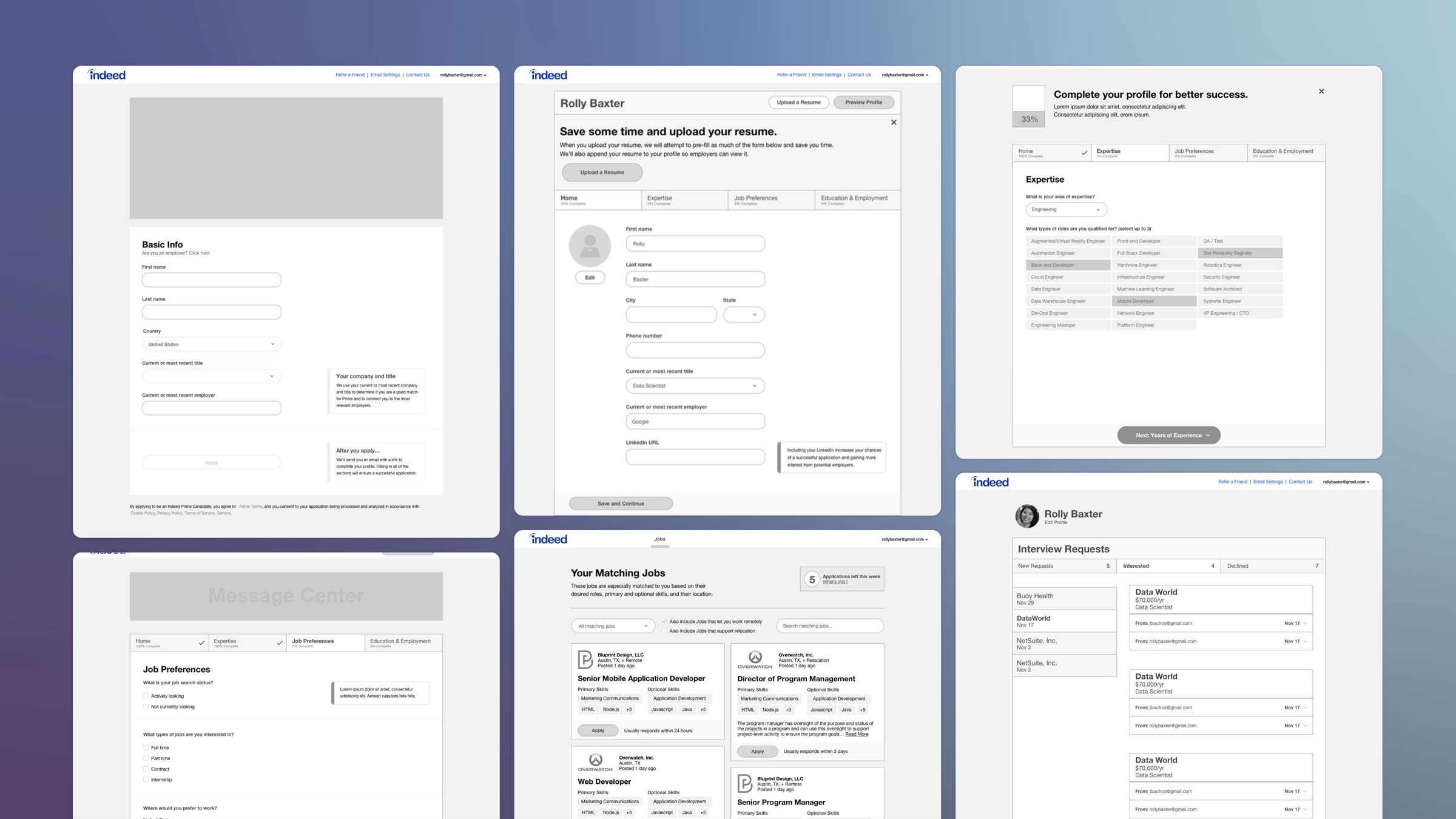
Wireframes for the redesigned application + profile journey as a single, coherent flow
Validating without launch data
I ran mixed-methods validation: quantitative preference testing (participants rating on clarity, effort, confidence) and qualitative usability sessions. Feedback was overwhelmingly positive and I had numbers to prove it. And, again, review teams were championing the automation concept. Then something rare for a contractor happened—I was invited to present to the GM and Director of Strategy, turning validation into a roadshow proving the team was working on business outcomes.
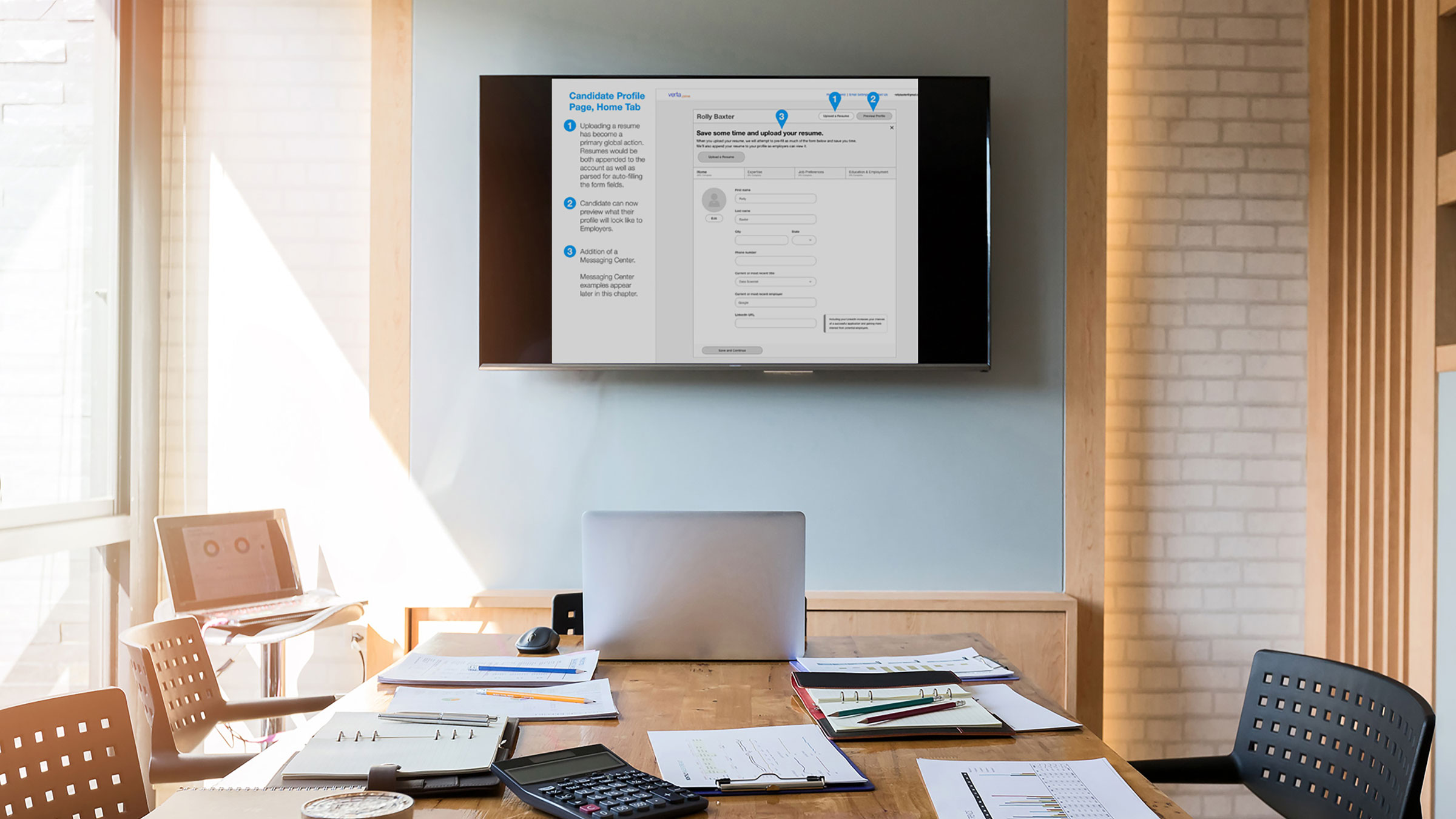
Taking the validated flow into a roadshow conversation with leadership
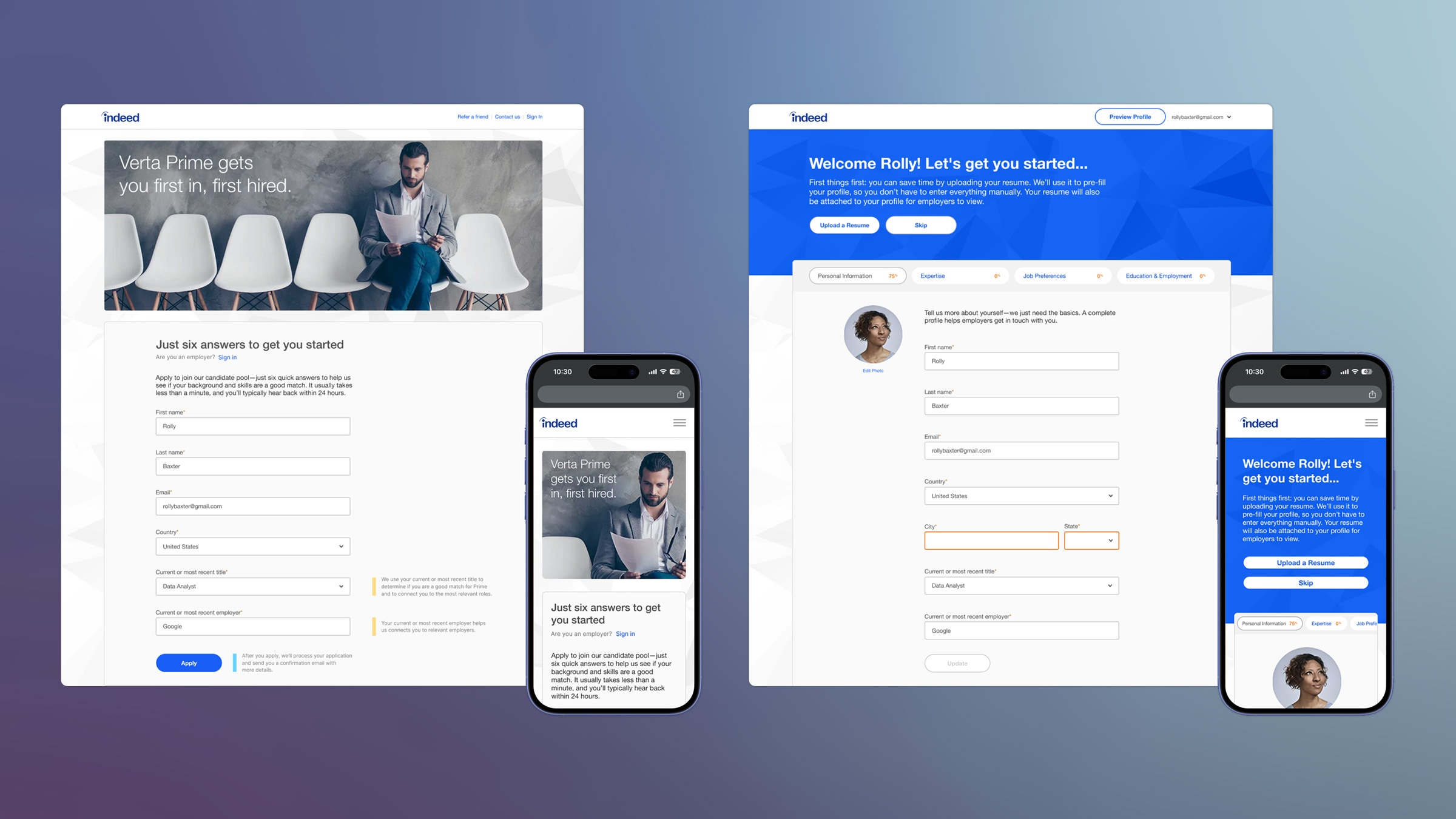
Visual design for the new candidate experience across desktop and mobile
Proof beyond the numbers
I'll never know if the automation shipped or what the actual post-launch metrics were. But I did learn that design impact isn't always measured in data. Sometimes it's measured in relationships created and advocacy earned—and whether a team wants you to stay. By my contract end, I was asked to convert to FTE, which was proof that the work landed.
“Desmond came on board and got to work on initiatives that would forever shape our product.The time spent working with him were some of the most productive months our team has experienced.Mike Hall, Product Design Lead, Indeed

Next up
McAfee